Happy to Chat: Creating Connections on Every Journey
A look at how small moments on the bus can make a big difference
Buses are more than just a way to get from A to B. Every day, they bring people together through small moments of kindness, conversation, and shared experience. Whether it’s thanking the driver, helping someone with a pram, or chatting during the journey, these everyday interactions can help people feel more connected to the communities around them.
That’s why we’ve launched our Happy to Chat initiative, encouraging passengers to feel more open to conversation and connection while travelling.
At a time when many people feel increasingly disconnected, we’ve conducted research to help give people more confidence to reach out and be happy to chat – this is important as our study found that 81% of Brits believe society is becoming less socially connected. Yet meaningful interactions still happen every day, just often in places people least expect, including on the bus.
Why small social interactions matter
Happy to Chat celebrates the value of everyday social moments and encourages people to connect naturally during their journeys. Buses are uniquely suited to these interactions as they are shared public spaces where people from different backgrounds, ages, and experiences travel side-by-side. Unlike many other environments, bus journeys create low-pressure opportunities for brief but meaningful connections.
As part of the initiative, we’ve partnered with leading psychologist and Professor of the Psychology of Kindness at the University of Sussex, Dr Gillian Sandstrom, and surveyed 1,000 Brits to explore how small everyday interactions can positively impact wellbeing, confidence, and community connection.
Why we feel more disconnected today
Modern life has made many daily tasks quicker and more convenient, but often with fewer opportunities for human interaction. Simple moments that once filled everyday routines, such as chatting to a cashier, speaking to someone while waiting for a coffee, or making small talk at the bus stop - these have gradually become less common.
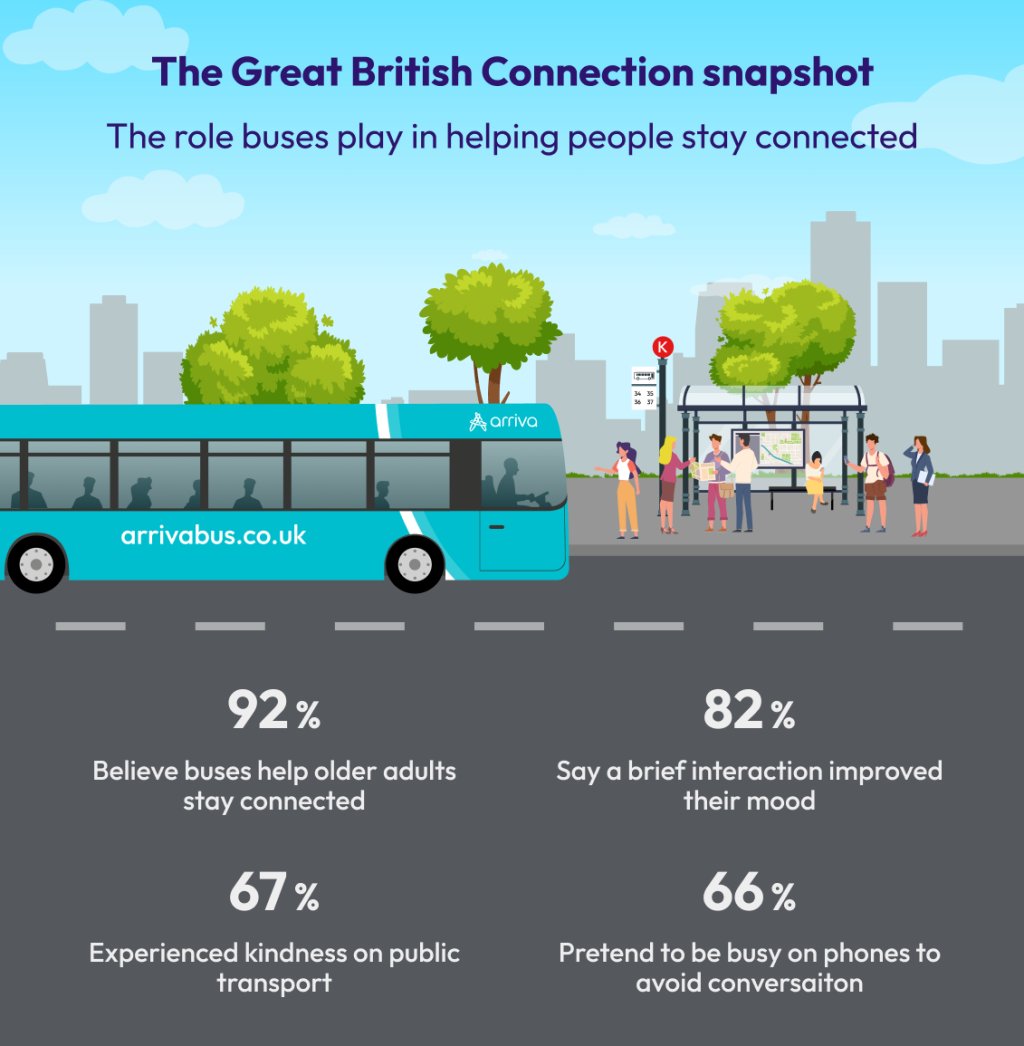
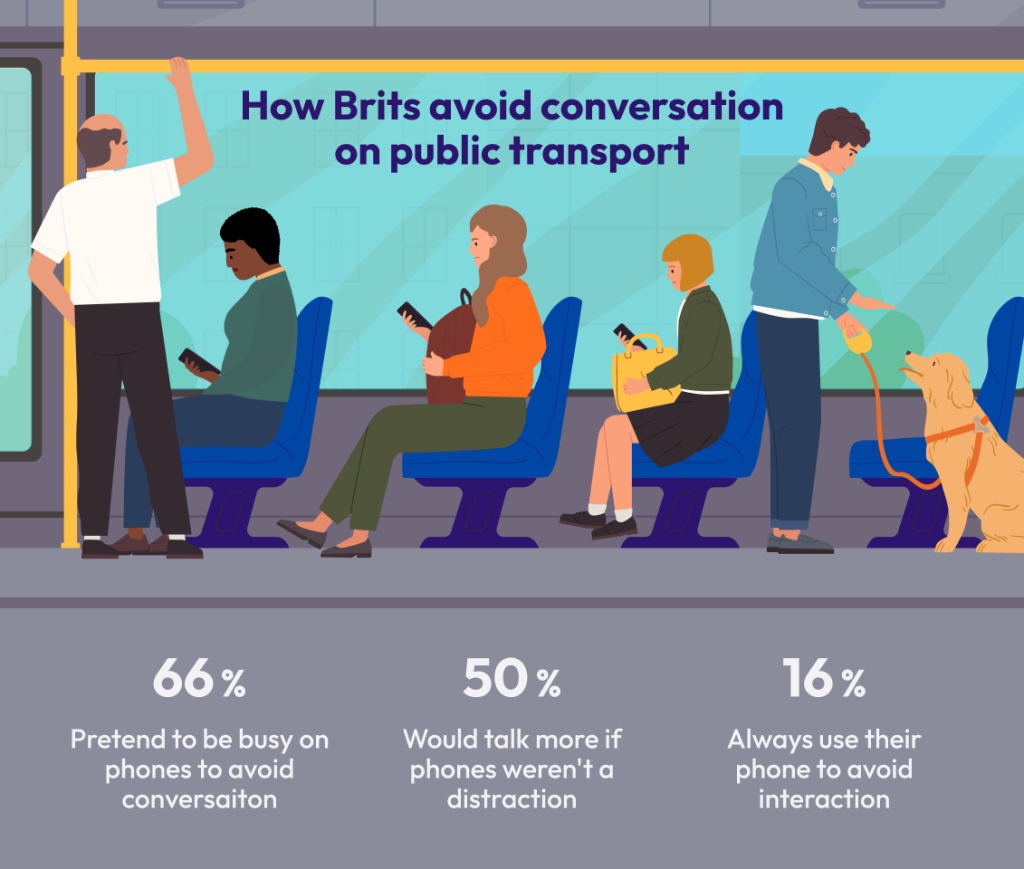
These small ‘micro-interactions’ helped people build social confidence and feel part of a community. Without them, many people now feel more isolated or out of practice socially. Our research found that nearly one in five people (18%) always use their phone to avoid interacting on public transport, while 66% admit to pretending to be busy to avoid conversation. In Scotland, this rises to more than three quarters of people (77%), showing just how common it has become to use phones as a social shield.
Why loneliness can be difficult to tackle
Loneliness is not simply about being alone, it’s about feeling disconnected or unnoticed, and it can affect people of all ages and backgrounds.
The encouraging news is that meaningful connection does not always require big gestures or long conversations. Small everyday interactions, like those that naturally happen on buses, can help people feel more connected, confident, and grounded.
The surprising power of small interactions
Research shows that even brief conversations with strangers can positively affect our mood and sense of wellbeing. People who have small, genuine chats during everyday moments, whether at a cafe, on public transport, or while at the gym, often feel happier and more connected afterwards, compared to those who remain silent.
Our own survey reflects this:
- 82% of Brits say a brief interaction with a stranger improved their mood
- In the East of England, this rises to more than nine in 10 people (91%)
- 67% have experienced an act of kindness on public transport
- 80% agree small everyday interactions are important to their wellbeing
We found that small interactions can also lead to small acts of kindness, such as waiting an extra moment for someone rushing to board, helping with a bag or pram, or sharing a laugh during a delay. In fact, 61% of Brits say they’ve been helped by a stranger on public transport, while 79% say they’ve helped someone else.
These moments may seem small, but they can cut through stress, loneliness, and the feeling of being invisible.
Happy to Chat aims to encourage more of these moments, helping passengers feel more open to conversation, community, and connection while travelling.
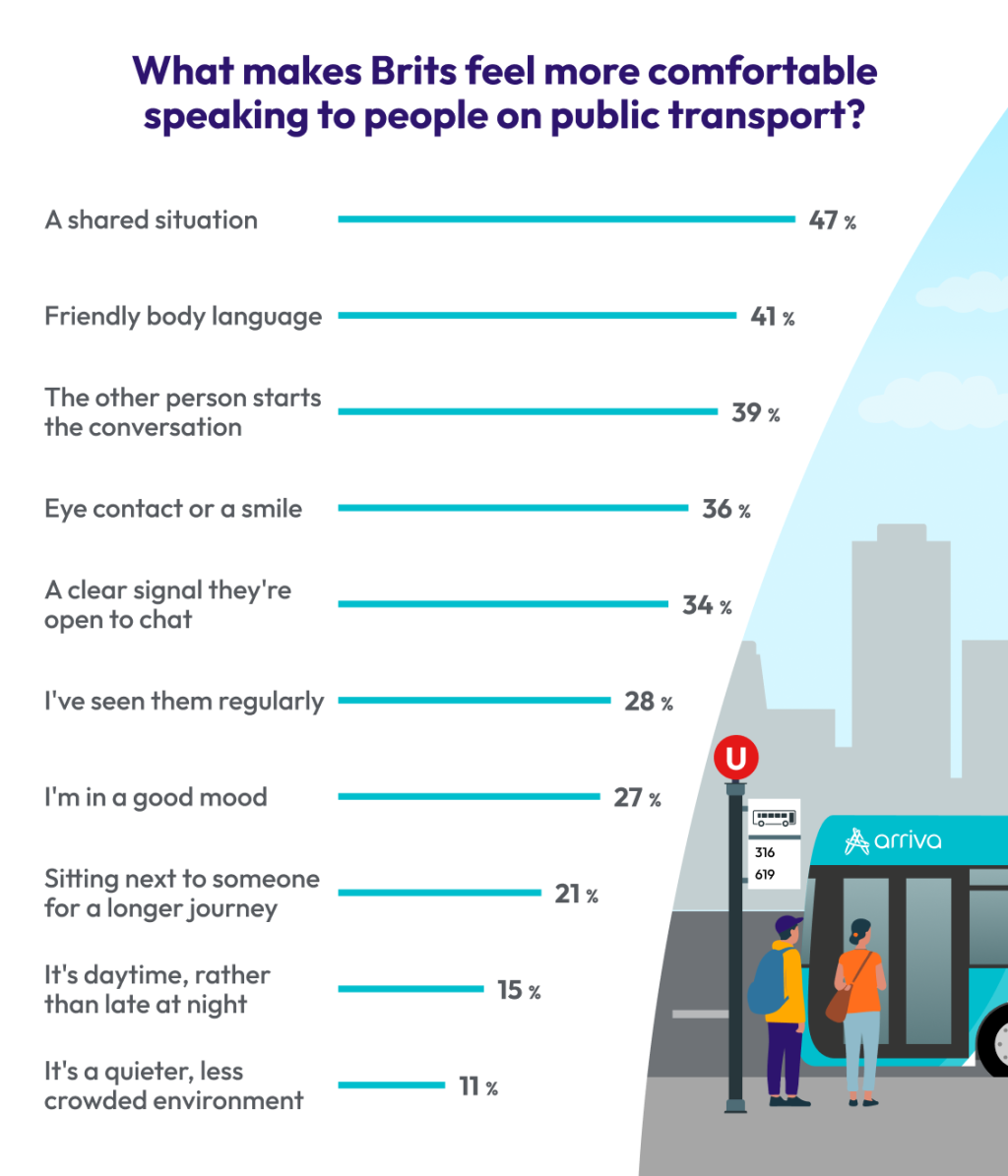
How to feel more connected, daily
Connection doesn’t require being naturally outgoing or starting long conversations. Often, the smallest gestures can help people feel more comfortable, connected, and part of the world around them. A smile, a quick thank you, or simply noticing the people around you can create positive moments for both you and someone else.
Dr Gillian has shared some top tips, to help people connect:
- Start small
A smile, hello, or simple comment can open the door to connection without pressure. - Use curiosity
Asking a genuine, easy question - such as whether someone’s day has been busy - can help conversations feel natural. - Don’t fear awkwardness
Most awkward moments feel far bigger in our heads than they do in reality. - Look up from your phone occasionally
Even brief eye contact or awareness of the people around you can create opportunities for connection. - Notice the people around you
Paying attention helps us become more receptive to small acts of kindness and shared moments. - Remember the “liking gap”
Research shows strangers often like us more than we expect after brief interactions.
How buses help people stay connected
Buses play an important role in helping people stay connected to the people and places around them. Whether it’s travelling to school, work, meeting friends, visiting family, or simply getting out of the house, everyday journeys create opportunities for routine, independence, and social interaction.
Small interactions are important for all ages, too.
For students travelling, buses help maintain friendships, education, part-time jobs, and new communities. In fact, three quarters of Gen Z and two thirds of Millennial respondents say buses provide opportunities for social interaction, either regularly or occasionally.
For older adults, regular bus journeys can offer valuable routine and social contact, particularly for those living alone. Almost all Brits (92%) believe public transport plays an important role in helping older people stay socially connected. Even small moments, such as recognising familiar faces, chatting with a driver, or exchanging a smile with another passenger, can help people feel part of a community.
Buses also create shared experiences across communities, from the school run and daily commute to family days out, airport travel, and busy festive periods. These journeys bring together people from different backgrounds and generations in a shared public space, creating small but meaningful moments of connection along the way.
Connection across the UK
Despite regional differences in how people experience connection and community, our research reveals a shared truth across the UK: everyday interactions still matter, and can play an important role in supporting people’s wellbeing.
It was also highlighted that there is growing concern about social disconnection, while also pointing to a continued appetite for human connection in public spaces and daily life.
Our survey shows:
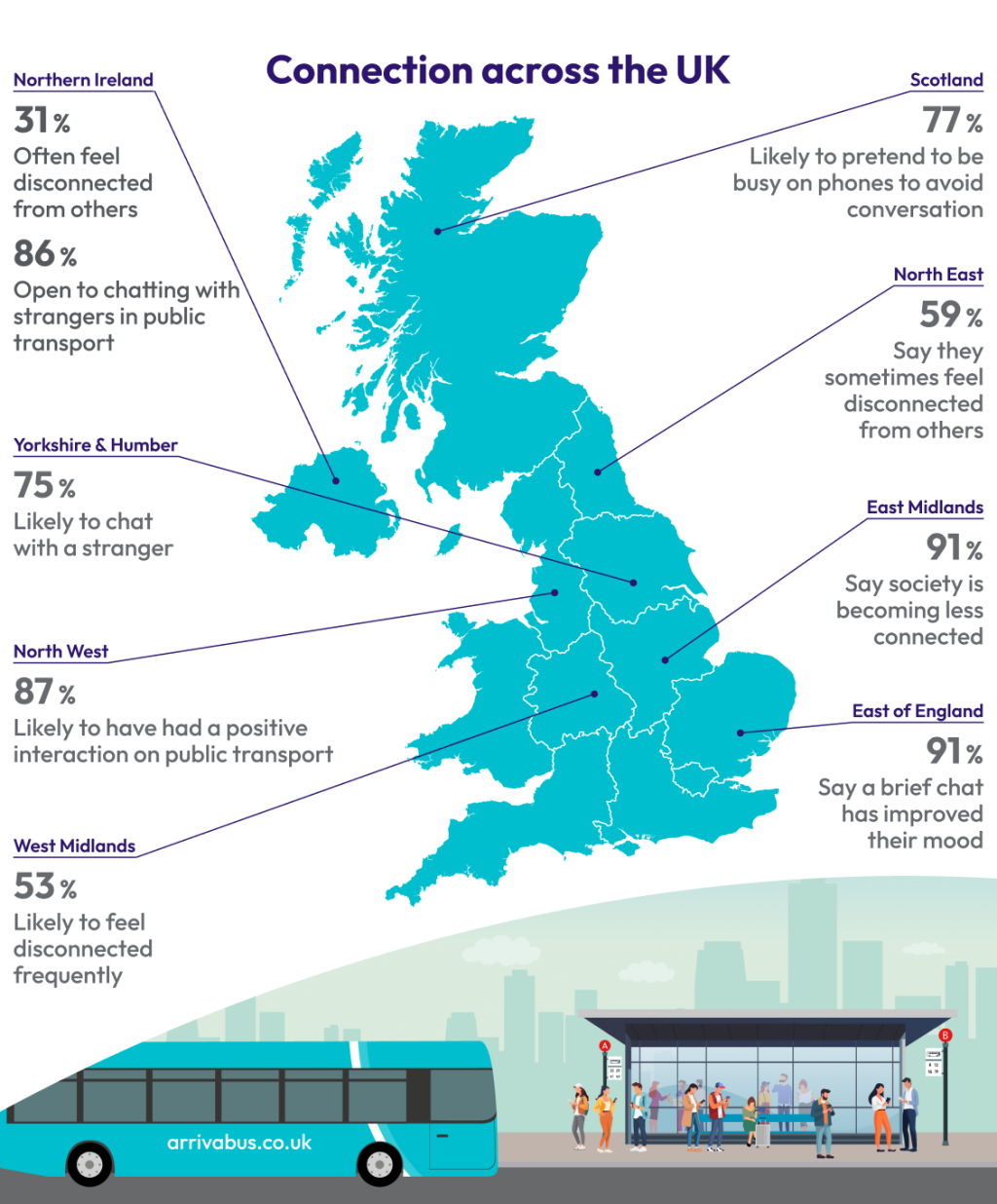
The importance of small moments of connection remains clear. In Wales, 85% of people say everyday social interactions are important to their wellbeing, highlighting how valued simple acts of conversation and kindness still are across the UK.
10 small ways to brighten someone’s day on the bus
Connection doesn’t always come from big conversations or bold gestures. Often, it’s the smallest interactions that leave the biggest impression.
Dr Gillian shares ten simple ways passengers can help create more positive moments while travelling:
- Recognise familiar faces: Seeing the same people on your route creates a quiet sense of belonging.
- Say thank you to the driver: These small rituals of appreciation help people feel connected to their community.
- Notice when someone might need help: Many acts of kindness begin simply by paying attention.
- Offer to help with a bag or pram: Small acts of help can completely change the tone of someone’s day.
- Compliment someone’s coat, scarf, or book: A genuine compliment can stay with someone long after the journey ends.
- Use the journey as common ground: Shared experiences, from bad weather to delayed buses — can naturally spark conversation.
- Let someone board first: Tiny moments of generosity often create a ripple effect.
- Share a quick comment or joke: Brief exchanges can lift moods more than we realise.
- Look up from your phone occasionally: Being present makes us more open to noticing opportunities for connection.
- Don’t underestimate ‘bus friendships’: Repeated small interactions with familiar strangers can build comfort and trust over time.
At a time when many people are feeling increasingly disconnected, small everyday interactions can make a meaningful difference. Through the Happy to Chat initiative, we hope to encourage more moments of kindness, conversation, and community across its network, helping passengers feel more connected, one journey at a time.
Plan your next journey with Arriva and experience your own moments of connection.